Human behaviour is complex, and it is shaped primarily by genes and the environment. In psychiatry, clinical practice focuses on altered behaviours and seeks to restore them to normal or socially acceptable levels. Although pharmacotherapy aims to rebalance the neural circuits involved in these altered behaviours, it has certain limitations. As a result, clinicians have long looked for treatments that can complement pharmacotherapy. Neuromodulation is one such option available in psychiatric practice.
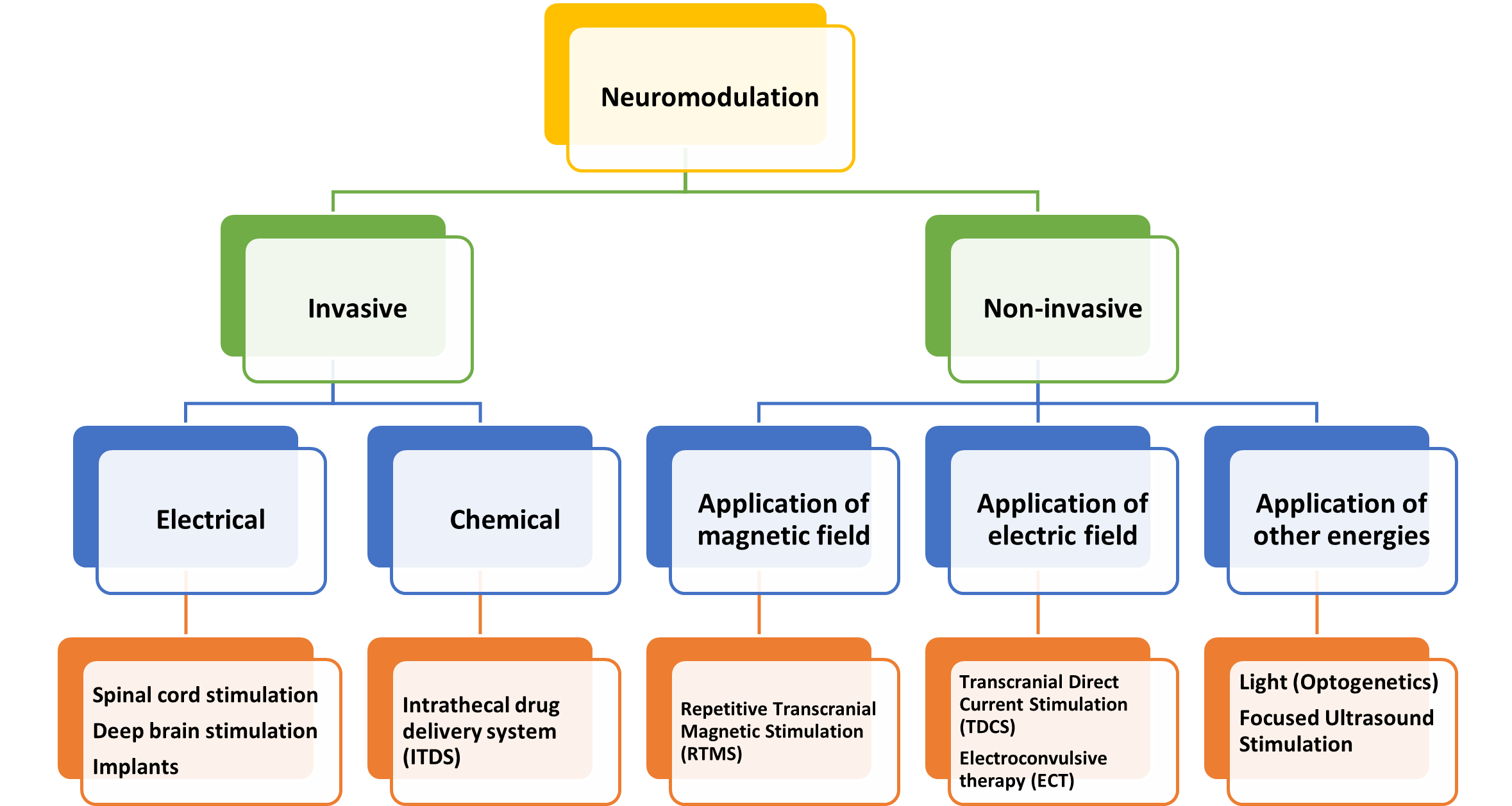
The International Neuromodulation Society defines neuromodulation as a field of science, medicine, and bioengineering that includes both implantable and non-implantable technologies designed to improve human functioning and quality of life. Neuromodulation involves the inhibition, stimulation, modification, regulation, or therapeutic alteration of neuronal activity in the central, peripheral, or autonomic nervous systems through chemical or electrical means. It is a non-destructive, adjustable, and reversible intervention.
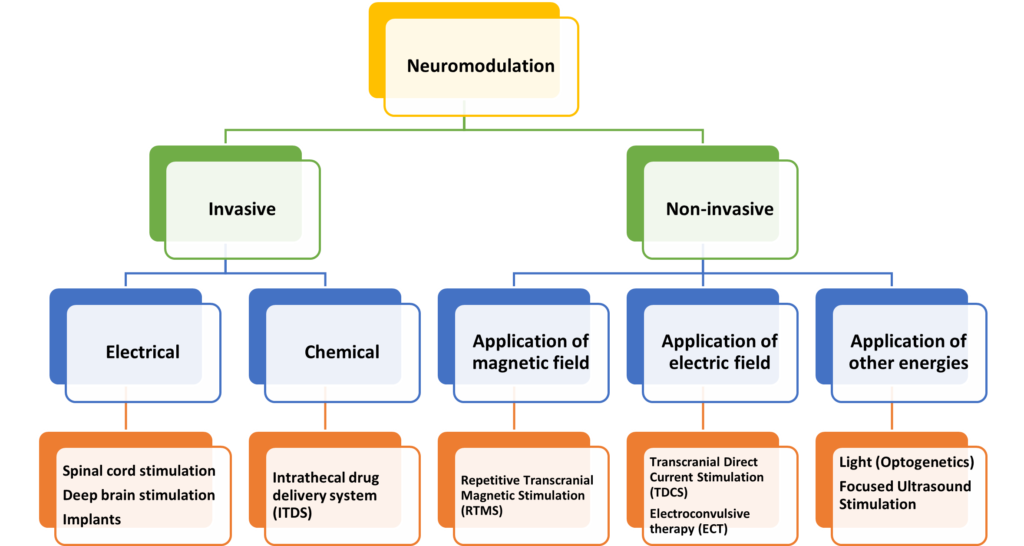
Among non-invasive neuromodulation treatments, rTMS, tDCS, tACS, and ECT are widely used worldwide. Since its introduction in 1985, rTMS has gained increasing importance and has emerged as a major alternative to ECT. The first FDA approval for TMS devices was granted in 2008, and since then the field has expanded rapidly. More recently, the availability of deep rTMS has encouraged many clinicians to explore its effectiveness in treating common psychiatric conditions such as depression and OCD.
In the next section, we’ll learn about Transcranial Electric Stimulation and its types.